

Slovenia is the EU’s 6th smallest state. Its population compares to cities like Brussels, Stockholm, Bucharest or Vienna. You probably haven’t heard about many Slovenes besides the likes of Tadej Pogačar, Melania Trump or Slavoj Žižek. It is thus easy to dismiss this week's Slovenian national elections as irrelevant.
But they are not. They might even be one of the key elections in 2026 within the European Union. Here are four reasons why.
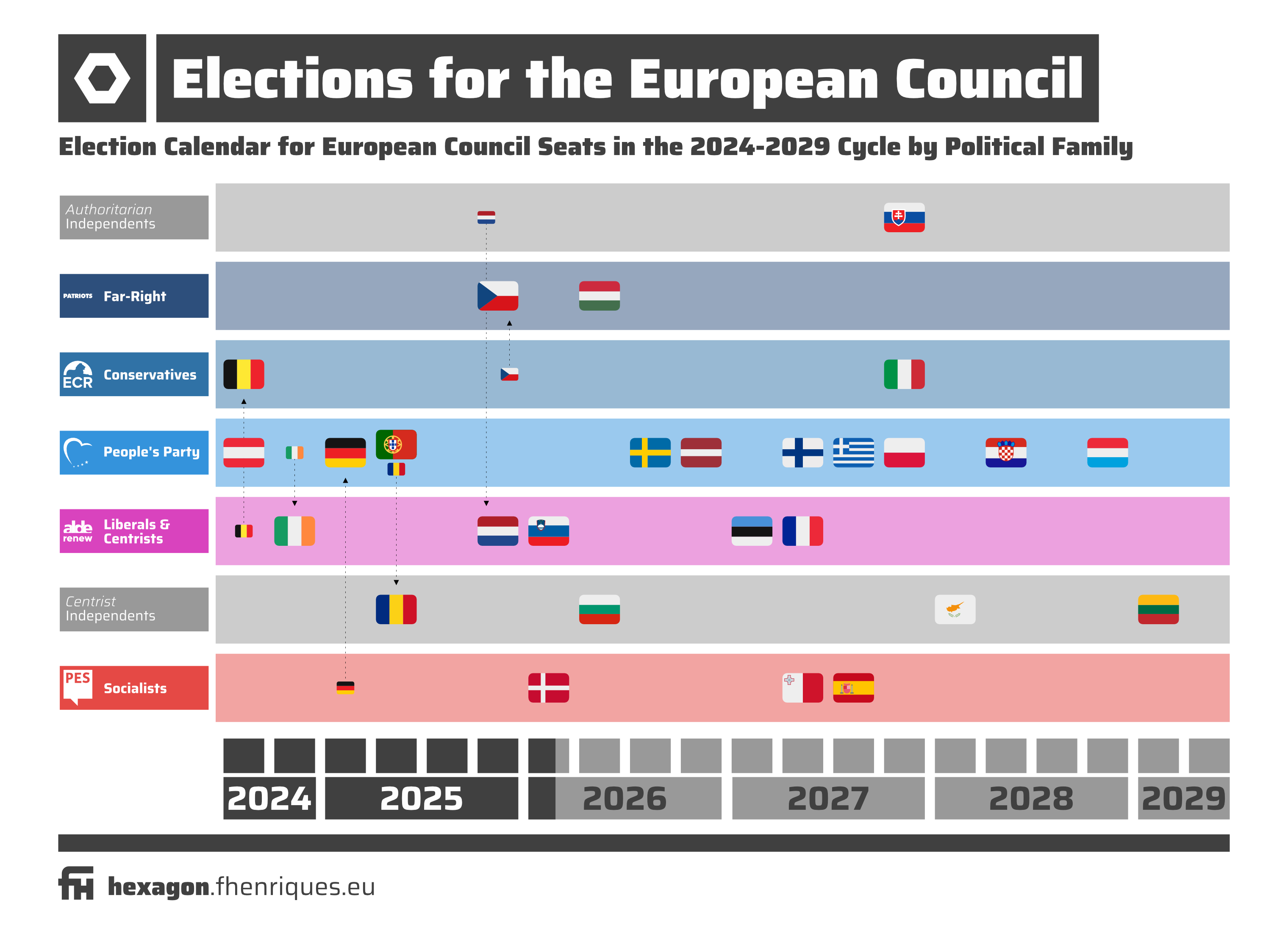
1st. Power in the EU is won state-by-state.
That the EU institutions are weirdly named is well known, and the Anglo-French axis that made sure to keep them confusing like that is to blame for the lack of clarity, but roughly speaking we can look at the European Council as the EU's collective head-of-state and the Council of the European Union as the EU’s upper house. And their composition is directly determined by national elections.
So while this week Slovenians are directly electing 90 MPs to their Parliament, they are also indirectly choosing the new Slovenian Prime Minister, government, and the Slovenian seats in the European Council and the Council of the EU.
Power in the European Union is won state-by-state, bringing together majorities in a majority of countries which inevitably changes the majorities in the EU.
2nd. Slovenia is a last progressive stronghold.
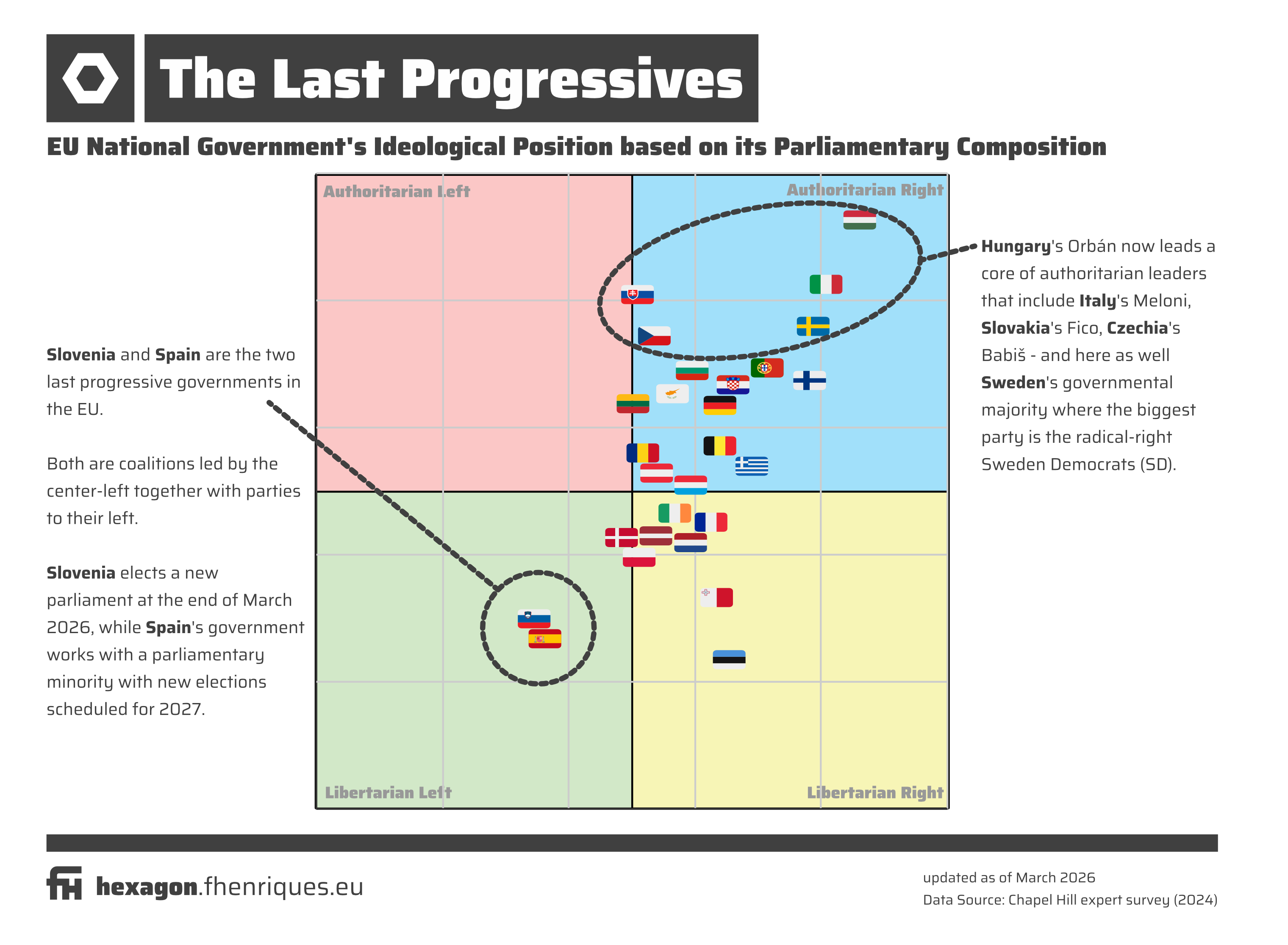
Together with Spain, Slovenia is the last progressive government in the European Union.
This is particularly clear in key policy areas like employment, where Slovenia’s Luka Mesec has, together with Spain’s Yolanda Díaz, led the push to protect workers’ rights. Foreign Minister Tanja Fajon calling “unacceptable violations of international law” to the US’s war of aggression against Iran, keeping coherence with the European position against Russia’s war of aggression against Ukraine, is a rarity in today’s Europe.
3rd. The alternative is an Adriatic Viktor Orbán.
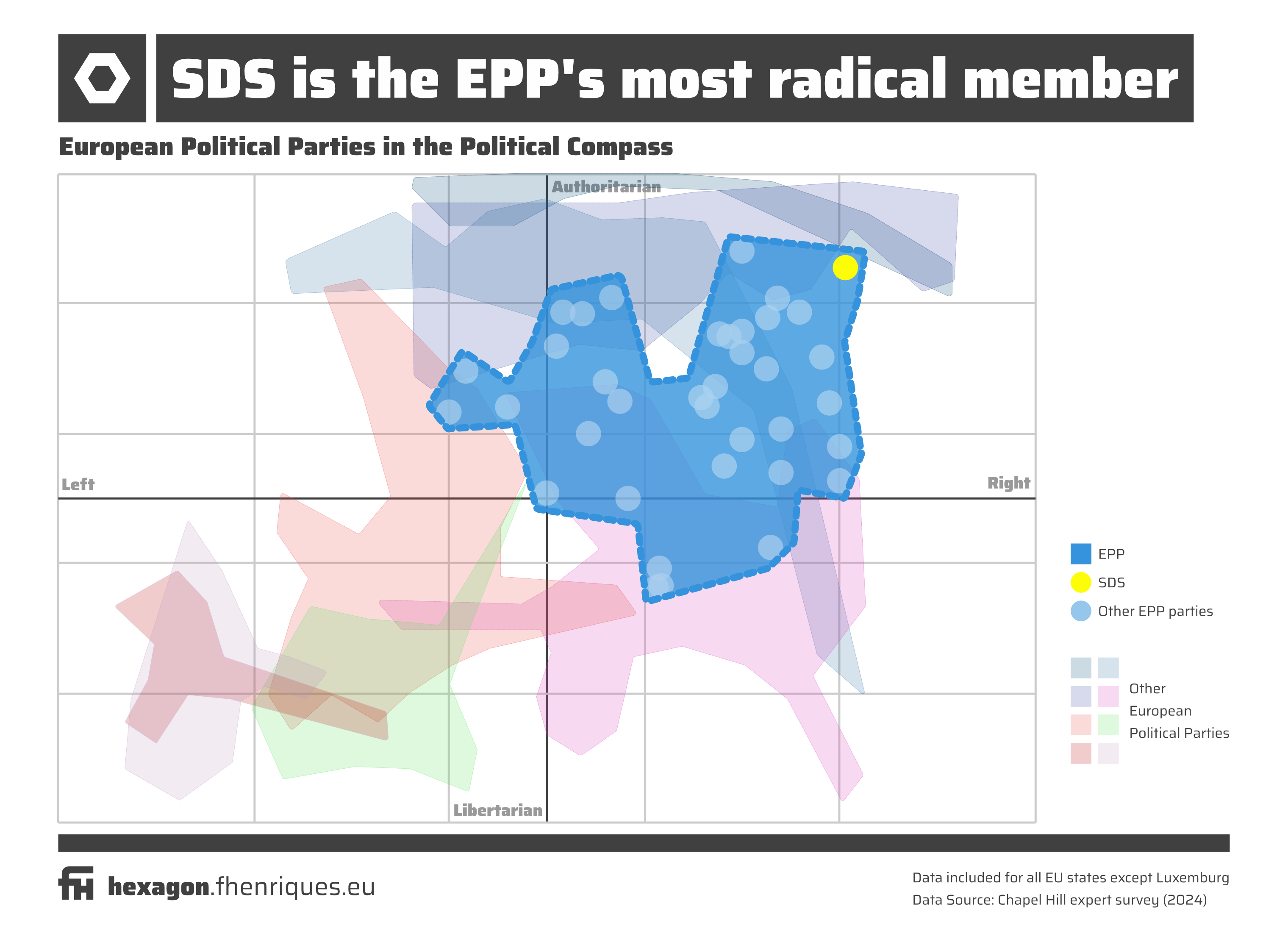
The alternative to the left-progressive government is not a democratic center-right government but an illiberal right-wing government led by Janez Janša who has previously sought to weaken Slovenia’s democratic institutions, following the footsteps of Orbán and Trump.
Like Orbán and Trump, Janša has previous experience in government. He has been Prime Minister in 2004-2008, 2012-2013 and again in 2020-2022. If he wins, he will become Prime Minister for the fourth time. His illiberalism comes from way back, but he has learned over time how to control the state and dismantle democracy’s institutional guarantees. Since his first term he has tried to control the media. He has attacked the independence of the judicial system. In 2020 he gained the global distinction of being the only world leader to congratulate Donald Trump for winning the election he didn’t win. In 2013 he was found guilty of corruption, having spent less than six months in jail. Since leaving government he has been alleged to have responsibility over the “Balkan non-papers”, a plan to divide Bosnia and Herzegovina between Serbia and Croatia.
Even within its own European political family - the European People's Party - Janez Janša's SDS is an extreme extreme of the radicalization of the mainstream right. This is despite the fact that the EPP and Manfred Weber have always fully supported him, just like they supported Viktor Orbán until that supported threatened to make the EPP powerless in Brussels.
4th. It really is 50-50.
According to the latest opinion polls, we enter the last week of the campaign with the government parties on 40%, with the opposition around Janša, composed of SDS and the NSi–SLS–Fokus coalition, on 36%. The most likely scenario is that one more party enters parliament and becomes the kingmaker: Demokrati, led by Anže Logar, a center-right party formed from a split in SDS.
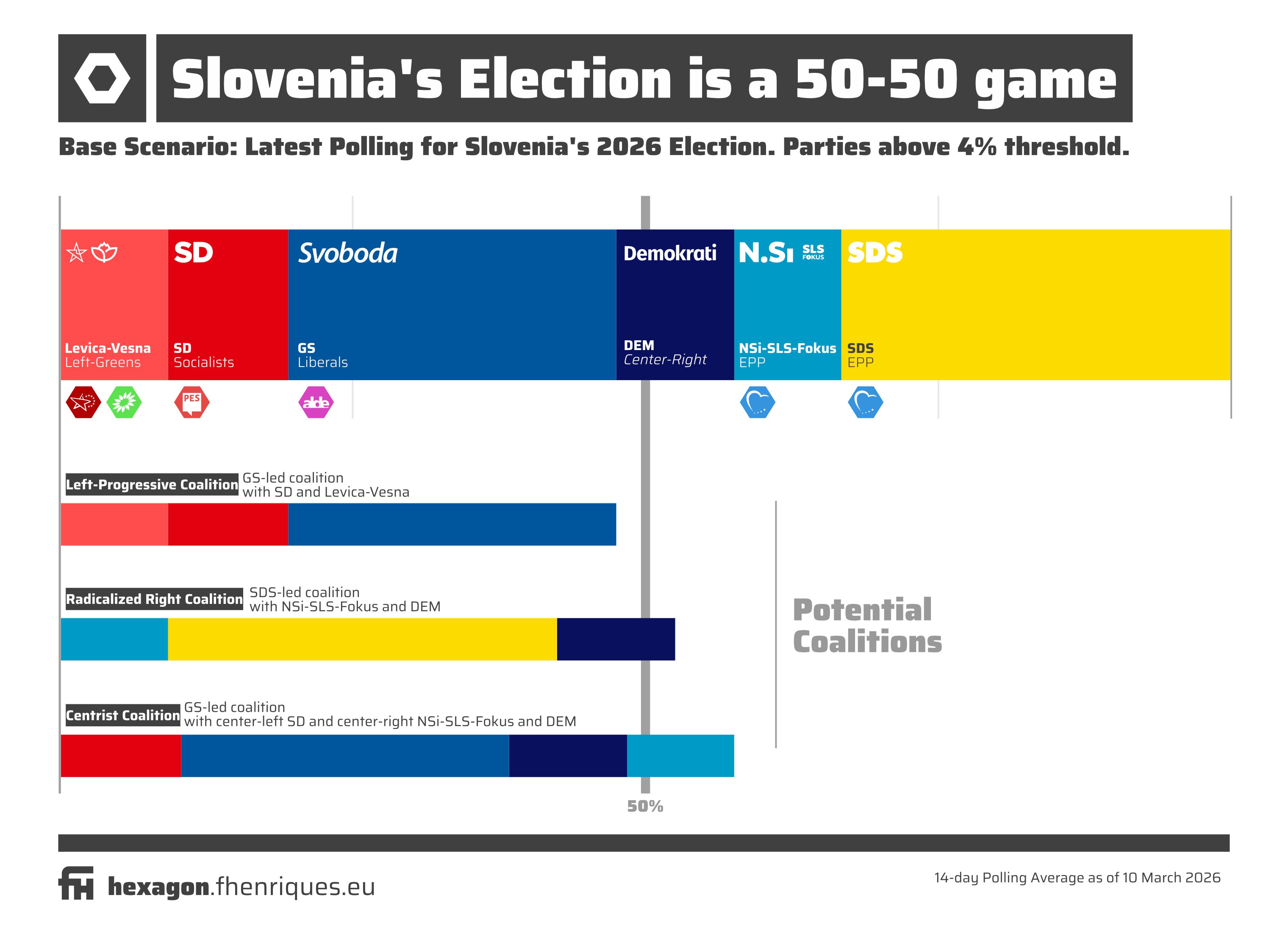
Anže Logar has claimed to be a party of the centre, pledging to form a government that brings together both left and right. Campaigning from the centre, it isn’t difficult to imagine him forming a pure right-wing majority the day after the election.
The right is thus ahead, but the numbers are close. Differential turnout among a polarized society could be enough to bring either block into a majority.
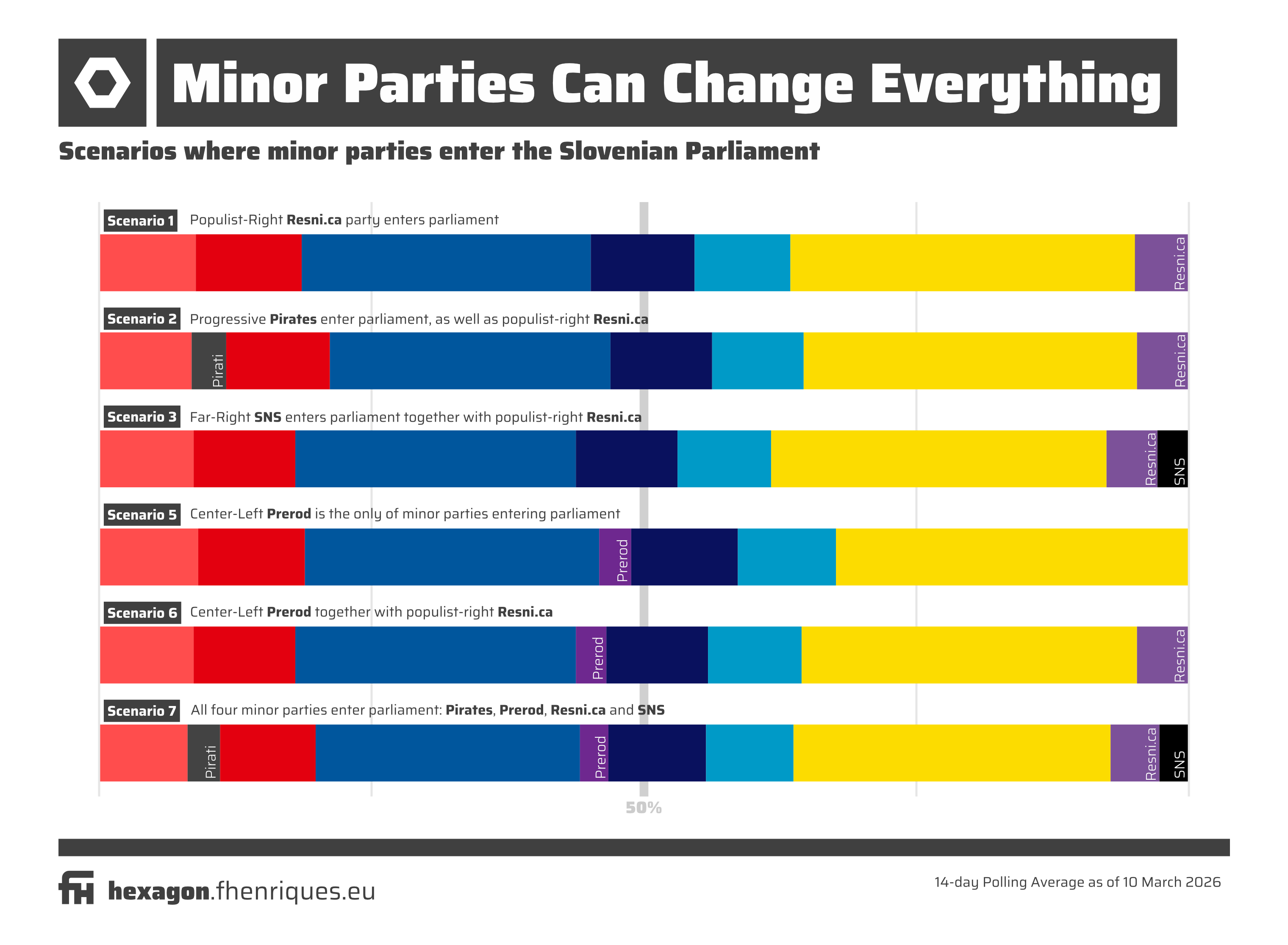
Enter the joker. There are four further parties that polls show could theoretically enter parliament, reshaping the math. Two of them are on the far-right: SNS, a more traditional nationalist party previously allied with Le Pen and Hungary's Jobbik, and Resni.ca – a newer model of populist far-right party, created around the COVID-19 pandemic. The other two are on the left, the progressive digital-first Pirate Party and the center-left Prerod created around the figure of the Green MEP Vladimir Prebilič. Whether any of them enter parliament – and which ones – could completely shift the balance.
Conclusion
The Liberal-Socialist-Left alliance that governs Slovenia is unique in Europe, and the government in Ljubljana is, together with Madrid, the last bastion of progressivism in the European Union. The most likely scenario is that by the end of this week this experiment loses, even though half of Slovene voters would still back the broader left. The alternative might be adding Janša to the reactionary wave that brought Orbán, Meloni, Fico and Babiš to the frontline of power in Europe. Yet there is still a chance that small Slovenia continues to show a path forward: building pro-democracy popular majorities that deliver for the social majority. A small state whose vote in the Council weighs as much as those of much larger ones, and whose choice says something about the direction of Europe. The question is: will this be one more win for the reactionary wave, or a resistance of the progressive camp that can build momentum for a much needed recovery? Denmark and Hungary are up next.